How to Customize an Ivory Ruffle Tulle Flower Girl Dress for a Boutique Collection
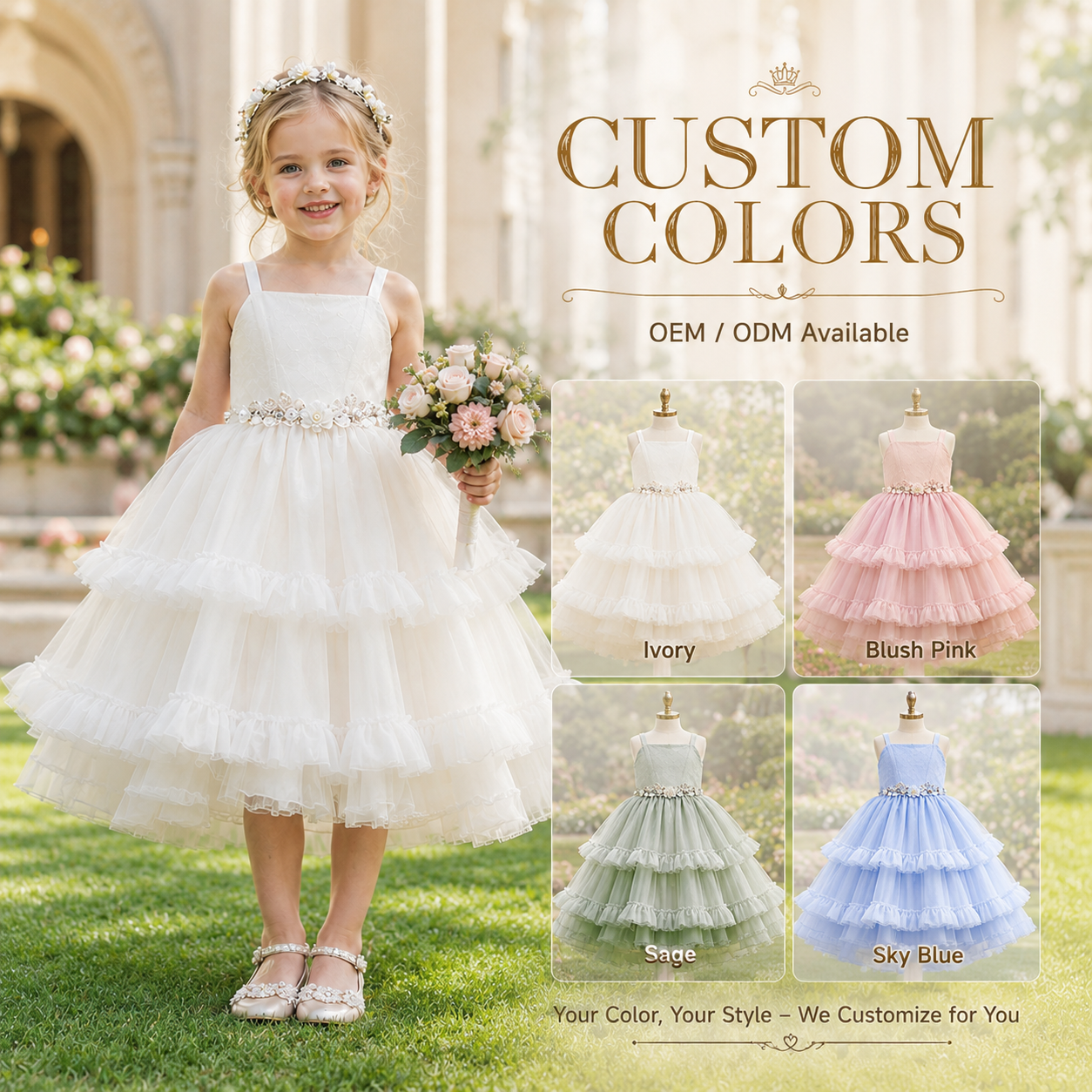
A flower girl dress has a clear role in a special-occasion assortment: it needs to feel coordinated with the event while still standing out in product photography and on a boutique rack. For B2B buyers, a useful first step is to turn a visual reference into a short, specific development brief. An ivory ruffle tulle dress offers a clear starting point because its silhouette and layered hem can be discussed separately from color and trim.
The image in this guide is a design reference, not a specification sheet. Confirm the actual fabric, construction, available options, and final appearance against the approved sample before making product promises to customers.
Define the customer and occasion first
Before changing details, decide who the dress is for and where it will be worn. Is the assortment aimed at weddings, family celebrations, formal portraits, or another occasion? The answer helps set a practical direction for length, coverage, decoration, and price positioning. It also helps buyers decide whether the style should coordinate with an event palette or serve as a repeatable ivory option.
Share the intended use with your manufacturing partner along with any visual references. If you already have a tech pack, include it. If you do not, annotate a reference image with the details you want reviewed. This reduces guesswork and makes it easier to separate fixed requirements from ideas that are still open for discussion.
Lock the silhouette before adding detail
For this style family, the tiered ruffle skirt is the most visible design feature. State the approximate skirt length and the look you want from the tiers: a softer cascade, a more defined edge, or a fuller outline. Point out which parts of the reference must stay consistent and which can be adjusted for your collection.
Next, confirm the bodice shape, shoulder treatment, waist placement, and back closure. These details affect both the appearance and the pattern discussion. If you want the same look across a size range, ask how the proportions will be reviewed during sample development. Avoid relying on a product image alone to communicate measurements.
Choose one focal detail
A waist accent can make an ivory dress easier to recognize without adding decoration everywhere. The reference image uses a floral detail at the waist. For your version, specify its approximate scale, placement, and preferred materials, or ask the factory to review alternatives that fit the design direction. Confirm whether the detail should be removable, repeated on a hair accessory, or kept as part of the dress only.
Keep a hierarchy: one main accent, then supporting details. If every area has a separate trim or embellishment, the sample becomes harder to assess and the finished assortment can lose a consistent look.
Make color and material decisions together
Ivory can vary from warm cream to a lighter neutral, and on-screen colors are not reliable substitutes for physical swatches. If you are considering additional colors, list each target shade and request confirmation that it can be developed for the selected construction. Review the fabric and trim together because their tones may appear different under studio, retail, and event lighting.
Record approved choices in writing. A simple reference sheet can include a color name or code, fabric description, trim placement, and notes about any acceptable alternatives. Keep unapproved options clearly marked as ideas rather than final specifications.
Plan sizing, labels, and packaging
Provide the intended size range and the measurement chart your brand follows. Ask which body measurements should be used and how grading between sizes will be checked. Buyers should review the sample measurements and fit before confirming a production specification.
For private-label projects, include label artwork, placement, care-label language, hangtag requirements, and packaging preferences in the same brief. Requirements differ by brand and sales market, so confirm the details that apply to your assortment before production planning.
A complete brief helps a supplier review the design more clearly. KOLESI TUTU supports custom kidswear and OEM/ODM project discussions; buyers can share a reference or tech pack to begin reviewing a flower girl dress concept. Explore the wholesale dress collections and the OEM/ODM customization process. Send the desired size range, target quantity, destination market, and label or packaging needs when requesting a quote. Final options and timing should be confirmed after the project details and sample requirements are reviewed. Request a project quote.