A Buyer’s Checklist for Custom Embroidered Girls’ Occasion Dresses
A distinctive girls’ occasion dress starts with a clear design brief. For boutique owners, children’s brands and sourcing teams, the brief is the bridge between a visual idea and a sample that can be reviewed against real requirements. An embroidered tulle dress may look simple in an inspiration image, but the outcome depends on many choices: the occasion, silhouette, decoration placement, color, sizing, closure and brand presentation. This checklist helps buyers turn a reference into useful project information.
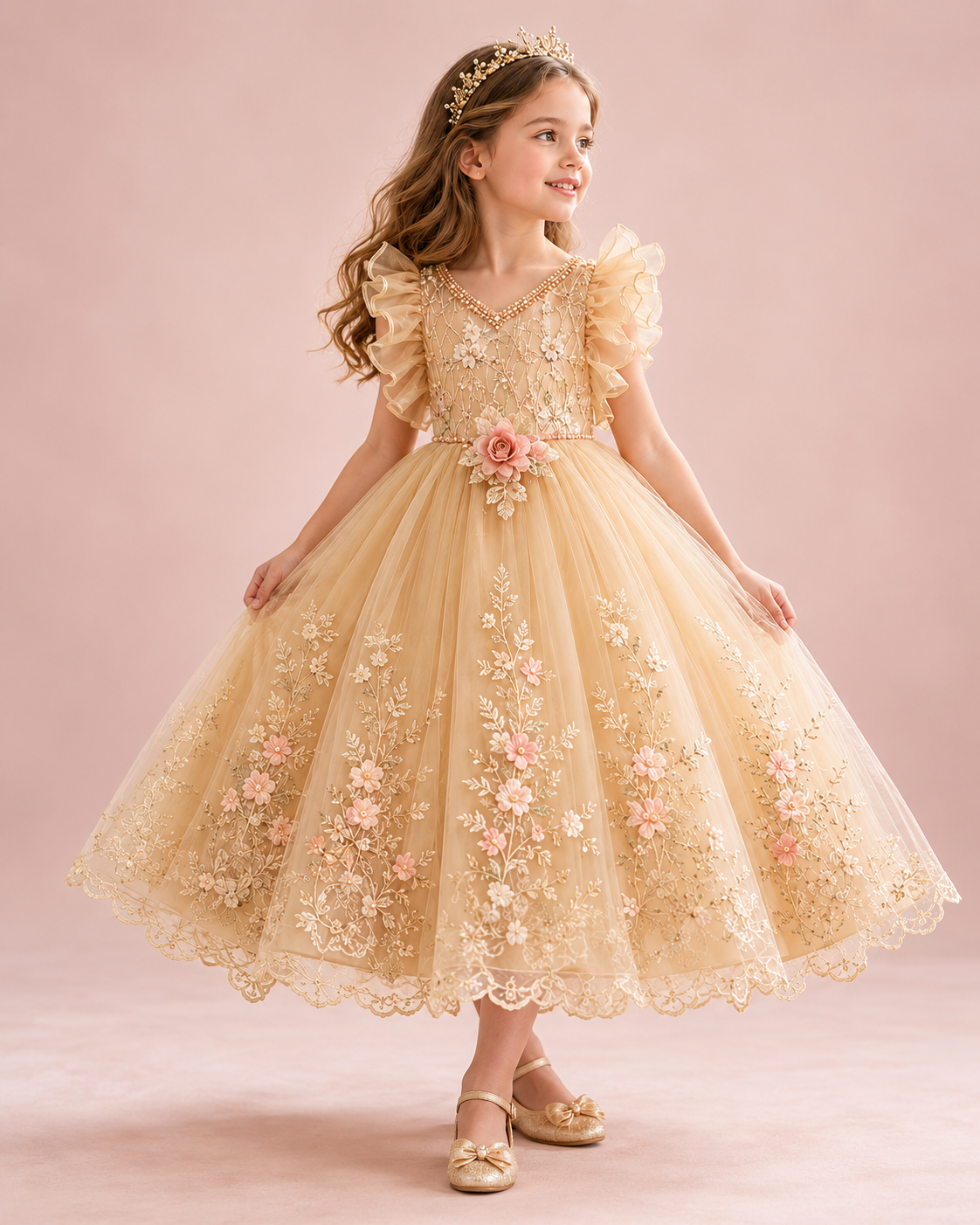
Design-concept notice: The champagne embroidered dress shown here is an AI-generated visual starting point, not a photograph of a finished KOLESI sample. Exact fabric composition, embroidery technique, trims, measurements and construction have not been verified from the image. Buyers should confirm those details in the approved design and sample process.
1. Define the occasion and customer
Begin with the role the dress should play in your assortment. Is it intended for flower girl wear, a birthday celebration, a formal party or another occasion? Describe the customer and retail context: the age range you plan to serve, the season, the price positioning you are targeting and how the dress should coordinate with the rest of your collection. These decisions help narrow the silhouette and the level of embellishment before detailed development begins.
2. Describe the silhouette in practical terms
Use a front and back reference when possible. Note the neckline, sleeve shape, waist position, skirt length and desired fullness. For a layered tulle look, say whether the visual direction is soft and flowing or structured and voluminous. Identify details that are essential to your concept and details that may be adjusted after sample review. An annotated image is often clearer than a long description alone.
The champagne concept combines ruffle sleeves, a decorated bodice, a floral waist accent and a full skirt. Those are visual cues only. A buyer brief should specify which cues to keep, which to simplify and how the finished garment should be assessed.
3. Map the embroidery and trims
Decoration needs a placement plan. Mark the areas where embroidery, appliqué, beads, sequins or other trims are intended to appear. Include a reference for motif scale and density, and state whether embellishment should be concentrated on the bodice, repeated across the skirt or used only as an accent. If hand-feel, comfort or snag resistance matters for your market, include that as a review point rather than assuming an image can answer it.
Ask the development team to confirm which techniques and materials are feasible for the selected design. Do not treat a rendered motif or decorative effect as a confirmed production specification.
4. Specify color and size information
Provide a named color reference, swatch or brand standard. Screen images vary, so a displayed champagne shade should not be treated as final color approval. Confirm the base fabric color separately from embroidery, lining and trim colors.
For sizing, share the target market and the size chart your brand intends to use. State which measurements are most important to fit review and whether the design needs to follow an existing block. No measurements should be inferred from a model image. Confirm the approved chart and sample fit before final production decisions.
5. Include closure, labeling and packaging
Add practical requirements to the same brief: back closure preference, lining expectations, care-label language, brand label artwork, hangtag details and packaging needs. If your team uses a tech pack, attach the relevant pages. If you are still at concept stage, a reference image, annotated sketch, target size range and branding notes provide a useful starting point for a project review.
6. Agree on sample review criteria
Before development, list what your team will check when reviewing a sample: overall proportions, decoration placement, color, finishing, comfort and measurements. Separate must-have requirements from optional refinements. Confirm project-specific minimum quantities, sample timing and production timing with the supplier after the design and order details are reviewed; do not assume them from a concept image.
A useful inquiry includes the dress reference, intended occasion, size range, color direction, embellishment map, label and packaging requirements, target quantity and delivery market. KOLESI TUTU can review a custom kidswear brief and discuss next steps for sample development. Explore custom kidswear development, browse the girls’ dress collection, or contact the team with your project details.
A well-prepared brief does not need to be complicated. It needs to make the buyer’s priorities visible, identify what must be confirmed and leave room for informed sample review. That gives both sides a clearer basis for discussing a custom embroidered girls’ occasion dress.