What to Include in a Private-Label Girls’ Dress Quote Request
A private-label girls’ dress quote request should include the style reference, requested sizes, quantity breakdown, branding and packing needs, and delivery destination. It should also identify the questions you need answered before sampling. These details give a manufacturer a defined project to review and give the buyer a basis for checking what a quotation includes.
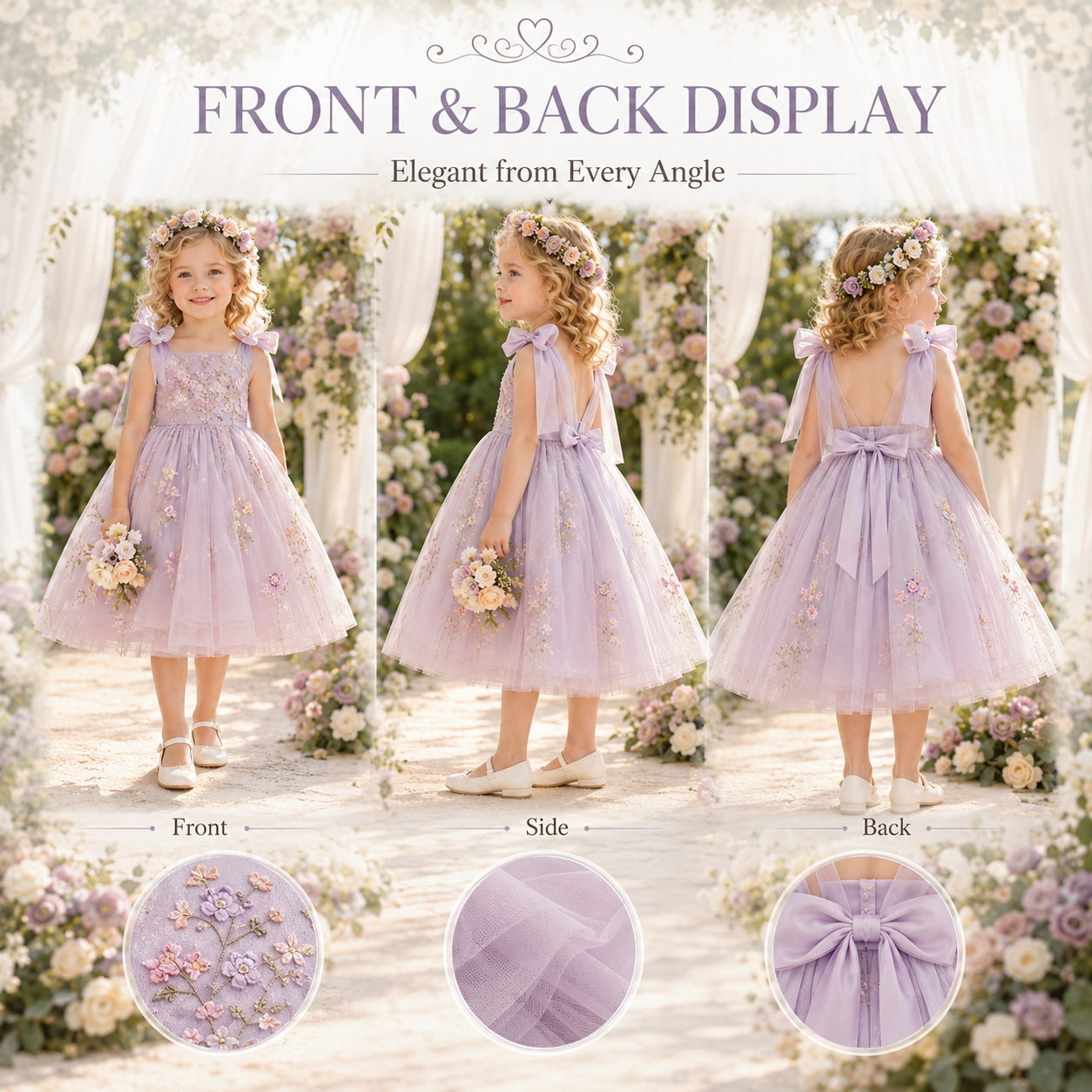
For boutique owners, clothing brands and wholesalers, the first enquiry does not need to settle every construction detail. It should distinguish confirmed requirements from options you want proposed. The lavender floral bow-strap dress shown here is an illustrative design reference, not a photograph of an approved sample. Use its front, side and back views to describe the design direction, then confirm the actual garment through specifications and sample review.
1. Identify the dress and the requested changes
Give the reference a working style name or code. Explain whether you want to discuss the pictured direction or develop a variation. For the lavender dress, note the shoulder bows, floral placement, skirt length, back opening and waist bow. Mark the features you want retained and the changes you want reviewed.
Avoid assuming that decorative details in an image establish how the garment is made. Describe the look you want and ask the manufacturer to propose the relevant material and construction details. You can explore girls’ dress style references before choosing the one reference that best explains your enquiry.
2. Provide the size and quantity breakdown
List your proposed size range and provide the size chart or measurements you want reviewed. Include planned quantities for each size and color, even if the first breakdown is provisional. Label estimates clearly so they are not mistaken for a final order.
KOLESI TUTU projects start at 200 pieces, with the style, color and size assortment confirmed for each project. Do not assume that this quantity can be divided into any combination of styles or colors. Send the proposed assortment for review, and ask the quotation to show the quantity basis used. The model’s apparent age in a reference image is not a size specification.
3. Separate visual direction from material specifications
Describe the requested color and surface appearance, then list any material requirements you already have. If the fabric composition, lining or decoration method is undecided, ask for proposals instead of leaving the uncertainty hidden. A digital lavender reference should be confirmed against a physical color or material reference during development.
The detail circles in this image are also illustrations. They do not prove fabric composition, stitching, attachment strength or finishing quality. Ask which details can be assessed through documents and which need an actual sample. Review the custom dress development process when preparing those questions.
4. State labels, packing and delivery requirements
Include your label artwork or explain which branding components you want discussed. Identify whether you need garment labels, hang tags, individual packing or carton identification. Keep those items separate in the enquiry so the quotation can explain which components are included.
Provide the delivery country and the destination information needed for the shipping scope you want quoted. State your preferred trade terms if you have them; otherwise ask the supplier to specify the basis of the offer. List any required arrival date as a buyer requirement to assess, rather than assuming a production or transport commitment has been made.
5. Ask for a quotation you can compare
Request the style specification, quantity basis, quoted currency, unit-price basis, sample charges where applicable, packing scope and delivery terms. Ask how long the quotation remains valid and which details must be confirmed before it can become an order agreement.
Compare offers against the same requirements. If one offer includes branded packing and another excludes it, record that difference before comparing totals. Keep unanswered questions visible. A reference image, initial quotation and approved production specification are different project documents, so each should have a clear date and version.
Send one complete enquiry
Package your reference, requested changes, size chart, quantity plan, branding files, packing notes and destination together. Add a short list of open questions and identify the person responsible for reviewing the proposal. This gives both sides a practical starting point for the next discussion.
KOLESI TUTU is a girls’ dress manufacturer serving B2B OEM/ODM and private-label buyers. Share your brief through the quote enquiry page or WhatsApp +86 136 5006 1099. Confirm project specifications, assortment and commercial terms before approving an order.