How to Specify a Bow for a Private-Label Girls’ Party Dress
A bow brief for a private-label girls’ party dress should identify its position, dimensions, proposed material, attachment and packing presentation. A reference image can explain the look, but it does not answer every construction question. Writing these details into the quotation request gives the buyer and manufacturer a clearer starting point for reviewing the same design.
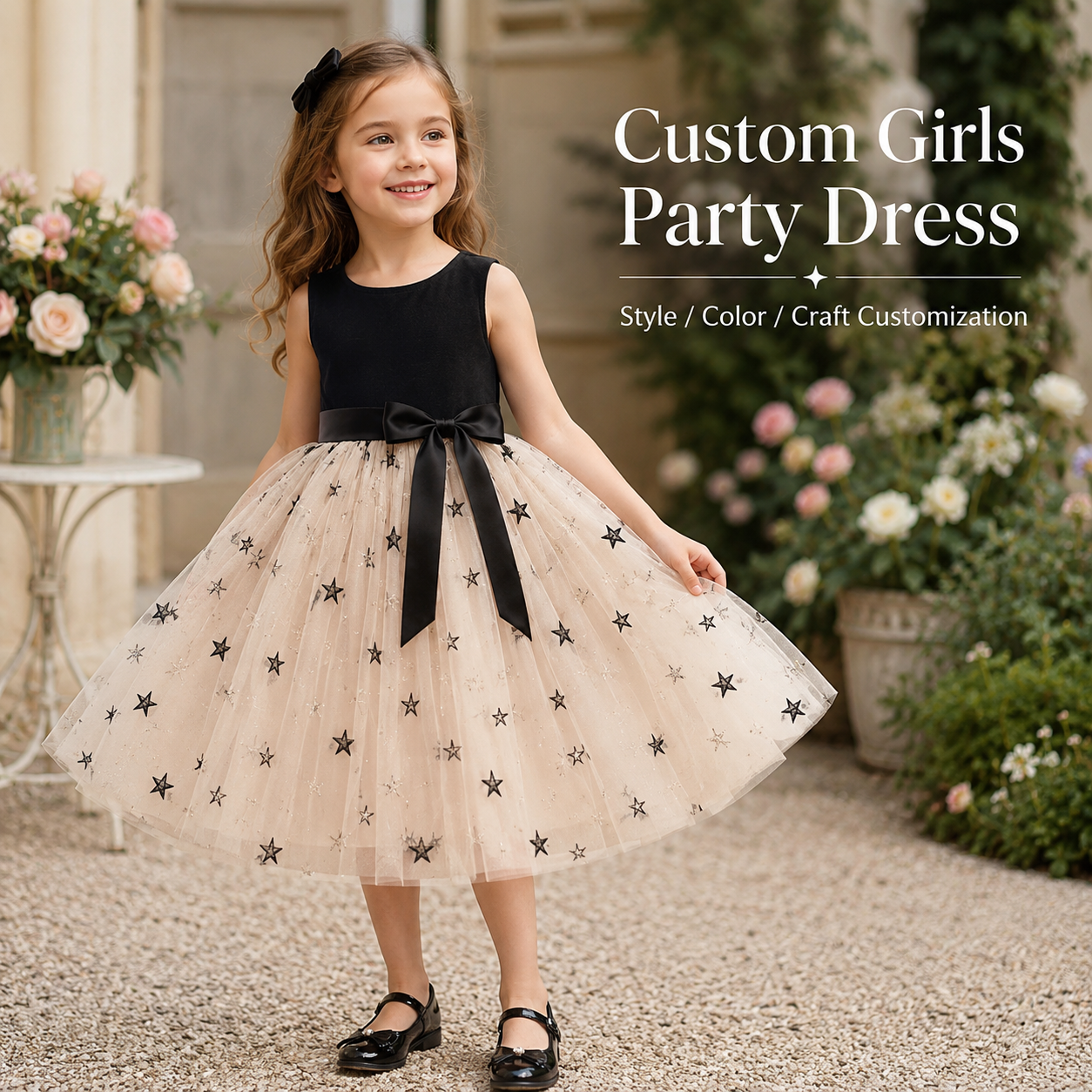
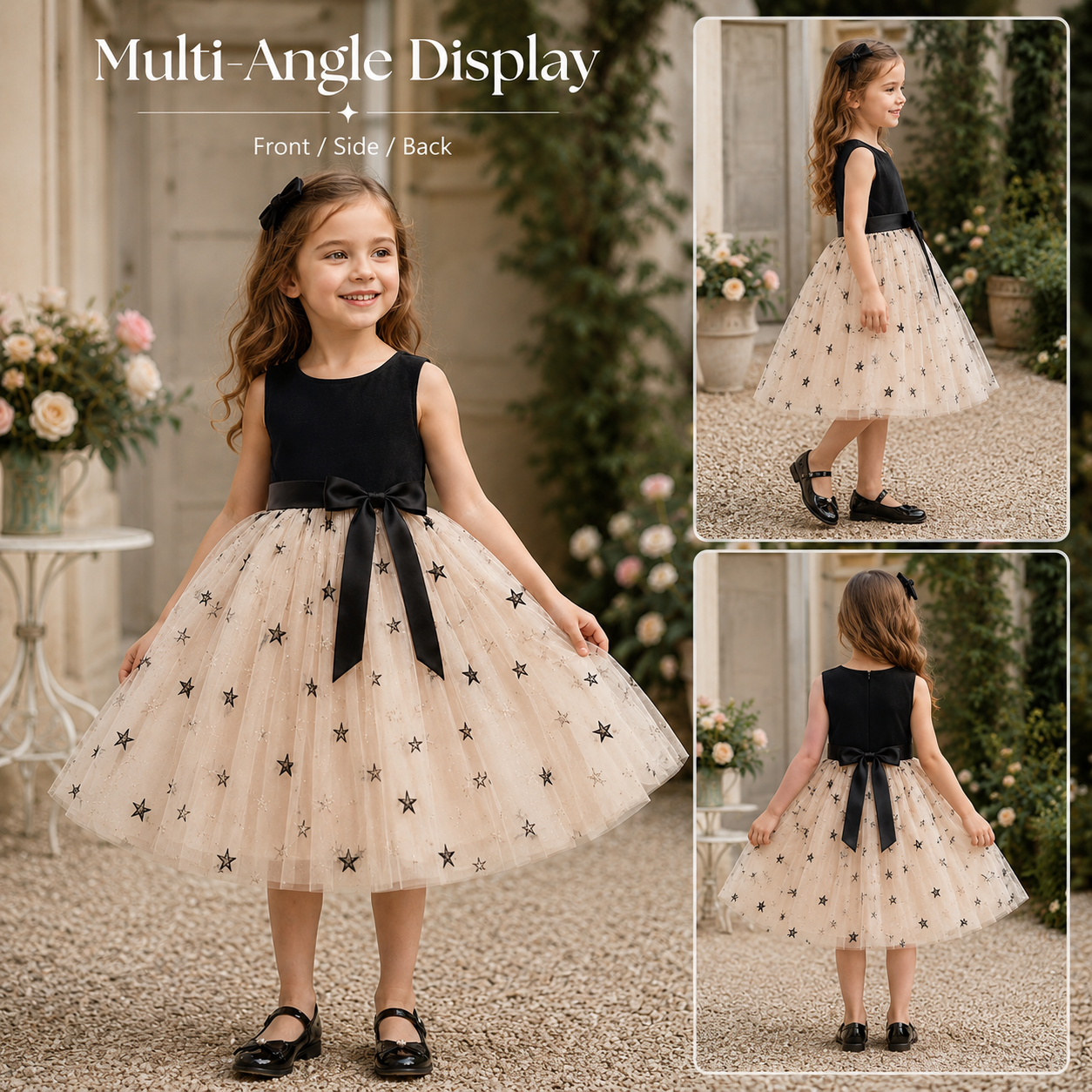
Consider this black-and-champagne star dress direction: a dark bodice, a contrasting skirt and a black bow at the waist. Those visible elements can guide a collection discussion. They do not establish the actual fabric composition, fastening method, stock availability or finished-garment performance. Use the reference to identify decisions, then confirm those decisions through development and sample review.
1. Mark the bow position
Show whether the bow belongs at the center front, center back or another location. Mark the intended position on a garment sketch and explain its relationship to the waist seam. If you want decoration on more than one side, identify each piece separately. A front bow and a back bow should not be assumed to be the same component.
Add the style reference and revision number to every marked image. This helps keep an older picture from being mistaken for the current instruction. When looking through the KOLESI TUTU product collection, separate the dress you selected from any changes you are proposing for your own brand.
2. Define dimensions and proportions
State the measurement unit and describe which dimensions you are requesting: overall width, loop height, center section and tail length. A styled image does not provide those measurements. If you have not chosen exact dimensions, mark the intended proportion and ask which points should be resolved during sampling.
Explain whether the bow should have the same dimensions across the size range or whether you want a size-specific review. Do not assume a decoration approved on one sample size will create the same visual balance on every garment size. Record the size used for each sample photograph and the measurement version being discussed.
3. Describe the material you want reviewed
Write down the intended color direction, surface appearance and structure. A buyer might want a soft tie effect or a more defined decorative shape, but those are design goals rather than confirmed material specifications. Ask which proposed materials can be assessed against the garment and the desired presentation.
Keep the bow, waistband and bodice materials as separate items in the brief. A similar color in a photograph does not prove they use the same fabric or finish. If matching is important, identify the physical reference or approval method you plan to use. Confirm the selected material rather than relying on an image label alone.
4. Clarify attachment and garment access
Explain whether the proposed bow is fixed, removable or intended to be tied. Ask the development team to review the attachment alongside the garment opening and dressing process. A decoration shown over the back waist does not reveal how the closure works beneath it.
Do not turn a visual reference into a safety or durability claim. Include your target-market requirements in the project discussion and identify any documentation or separate assessment needed. The custom development enquiry route is a place to share these construction questions together with your tech pack, labels and garment measurements.
5. Include presentation and packing
Tell the supplier how you expect the dress to arrive and be handled before display or fulfillment. Identify whether the bow should be tied, arranged or supplied in another agreed presentation. Ask how the proposed packing method will be reviewed with the sample. A request for attractive presentation should become an instruction that both parties can understand.
Keep branded bags, hangtags and carton requirements in their own section. List them as quotation items instead of assuming they are included with the garment. When comparing proposals, check that the same requested components and packing assumptions are being discussed.
Turn the discussion into a quote-ready brief
Send one dated file containing the chosen dress reference, bow notes, size chart, quantities by size, material preferences, labels, packing requirements and delivery destination. Mark unresolved points as questions. During sample review, record each decision as approved, revise or awaiting information, and keep the approved version with your project records.
For a factory discussion about custom girls’ party dresses, send KOLESI TUTU your project requirements or contact WhatsApp +86 136 5006 1099. Final materials, construction, quotation and timing require confirmation for the specific project.