How to Write a Tulle Dress Packaging Brief for Your Boutique
A tulle dress packaging brief should explain how the garment is presented, identified and grouped for delivery. For boutique owners and private-label kidswear buyers, approving the dress design is only part of the order review. The packing instructions should also make sense for the way your team receives, checks and displays the collection.
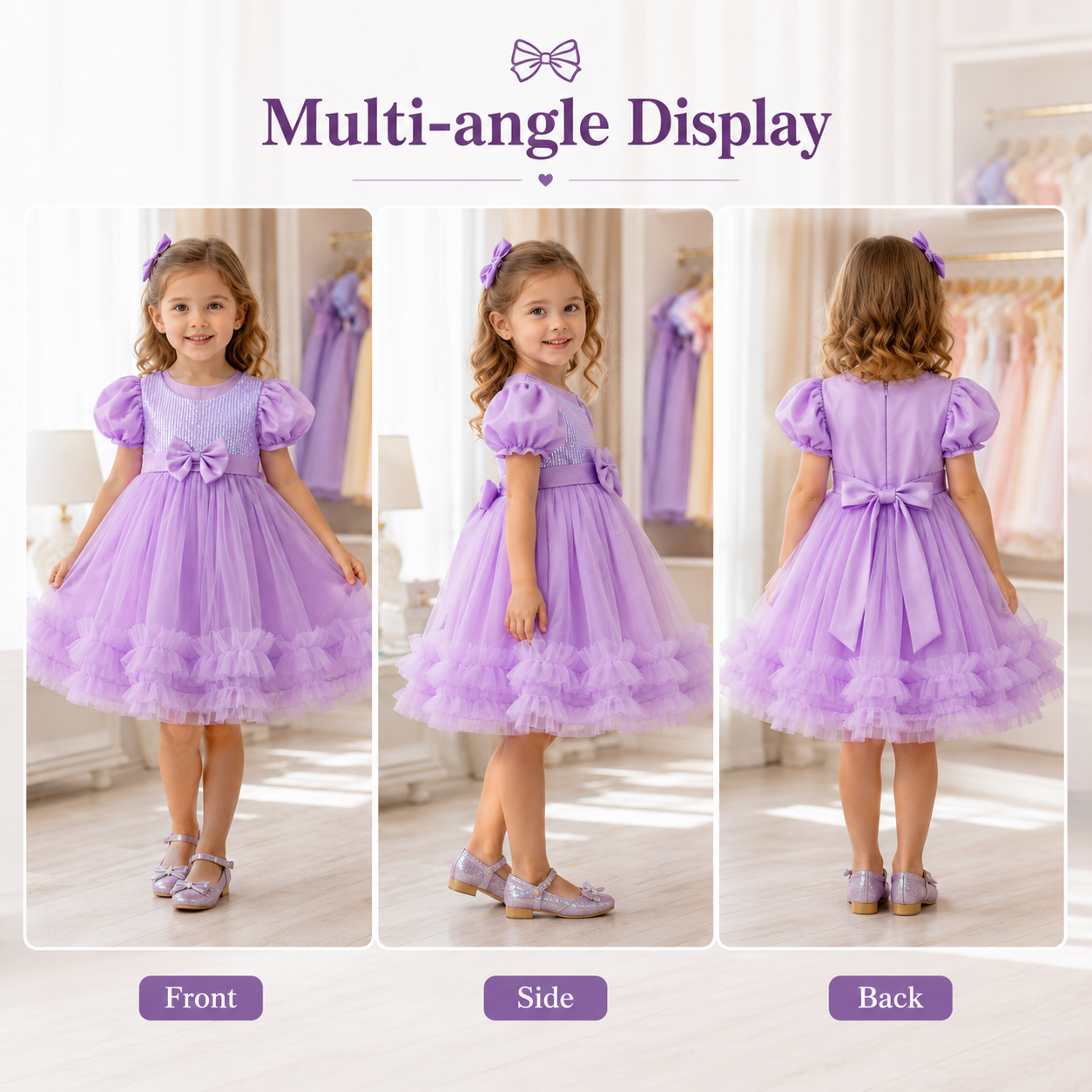
The accompanying purple puff-sleeve dress image is an illustrative design reference. It shows a bow, a layered skirt and front, side and back views. It is not a photograph of a packed garment or an approved production sample. Use it to identify questions, then confirm the answers with a real sample and written specifications.
1. Describe the presentation you want to receive
Start with your receiving process. Will staff unpack individual dresses for a rail, place them on shelves, or send them to customers in their original packaging? Explain that process in the brief. It gives the supplier a concrete use case to review rather than an instruction such as “make the packaging premium.”
For a style with a waist bow and a layered tulle hem, specify which features you want visible when the pack is opened. Ask how folding could affect the presentation and whether any preparation is needed before display. Confirm the proposed arrangement with a packed sample rather than assuming the reference image represents the arrival condition.
2. Separate appearance from garment protection
A branded box and an individual garment bag serve different purposes. Discuss the presentation, handling and packing requirements together, but record them separately. State whether your proposal includes a bag, a box, tissue, an insert or another component. Ask the supplier to review compatibility with the selected garment and packing method.
Do not decide protective details solely from a digital illustration. The actual fabric, decoration and finished sample need review. Note any area that should be checked after unpacking, such as the bow, sleeve shape or skirt layers. Use those observations to refine the packing instructions before approval.
3. Make style, color and size identification clear
Write a simple identification plan for each garment pack. Include your style code, approved color name and size designation. If your team uses barcodes or stock labels, provide the correct artwork or data and show the intended placement. Keep identifiers consistent across the packing list and your own inventory system.
Distinguish these handling labels from garment labels and any destination-specific information your business requires. Confirm the content and format with the people responsible for your market requirements. A supplier discussion should not be treated as a substitute for that review. For the garment itself, compare your brief with the girls’ dress collections before deciding which details belong to the chosen style.
4. Explain how the order should be grouped
Tell the supplier whether you want cartons grouped by style, color, size or a defined assortment. Provide the planned quantities and ask for a proposed packing list. If a carton will contain mixed sizes, describe how your receiving team should identify that mix without opening every individual pack.
Avoid setting carton dimensions or quantities from the dress image alone. Those decisions depend on the garment, the packing method and the shipment plan. Request confirmation of the proposed arrangement and keep the final packing list with the approved order documents. Describe any receiving constraints that need to be reviewed before packing begins.
5. Review a packed sample and record approval
Ask to review the complete proposed pack, including garment arrangement, labels and any branded components. Compare it with your brief and record changes in one versioned document. A clear approval note should identify the style, the packing components and the reference photos used for the decision.
For example, your note might specify the agreed bow position, the chosen size-label placement and the approved carton grouping. These are review points, not promises that a particular material or packing method is already available. Discuss feasibility through the custom development process before treating a reference as an order specification.
Prepare one complete enquiry
Send your selected style reference, target size range, planned quantities, destination, branding artwork and packing requirements together. Identify which details are fixed and which you want the supplier to propose. That keeps the discussion focused on decisions that affect your actual order.
KOLESI TUTU welcomes B2B enquiries for custom girls’ dresses and private-label kidswear. Use the project enquiry page or WhatsApp +86 136 5006 1099 to discuss your brief. Confirm materials, packing, quantities and timing for the specific project before approving production.