Planning a Custom Flower Girl Dress Capsule: A Buyer’s Design Brief Checklist
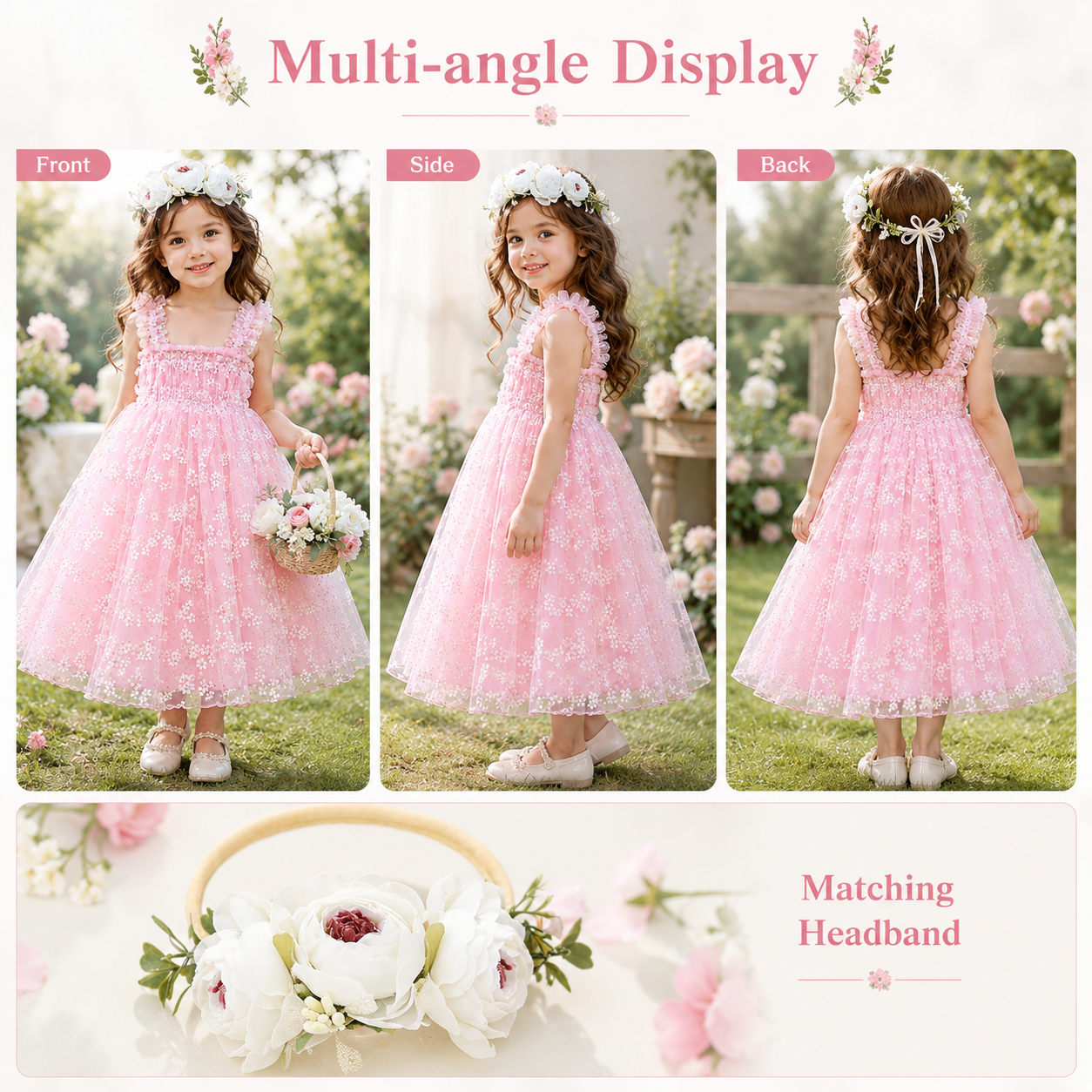
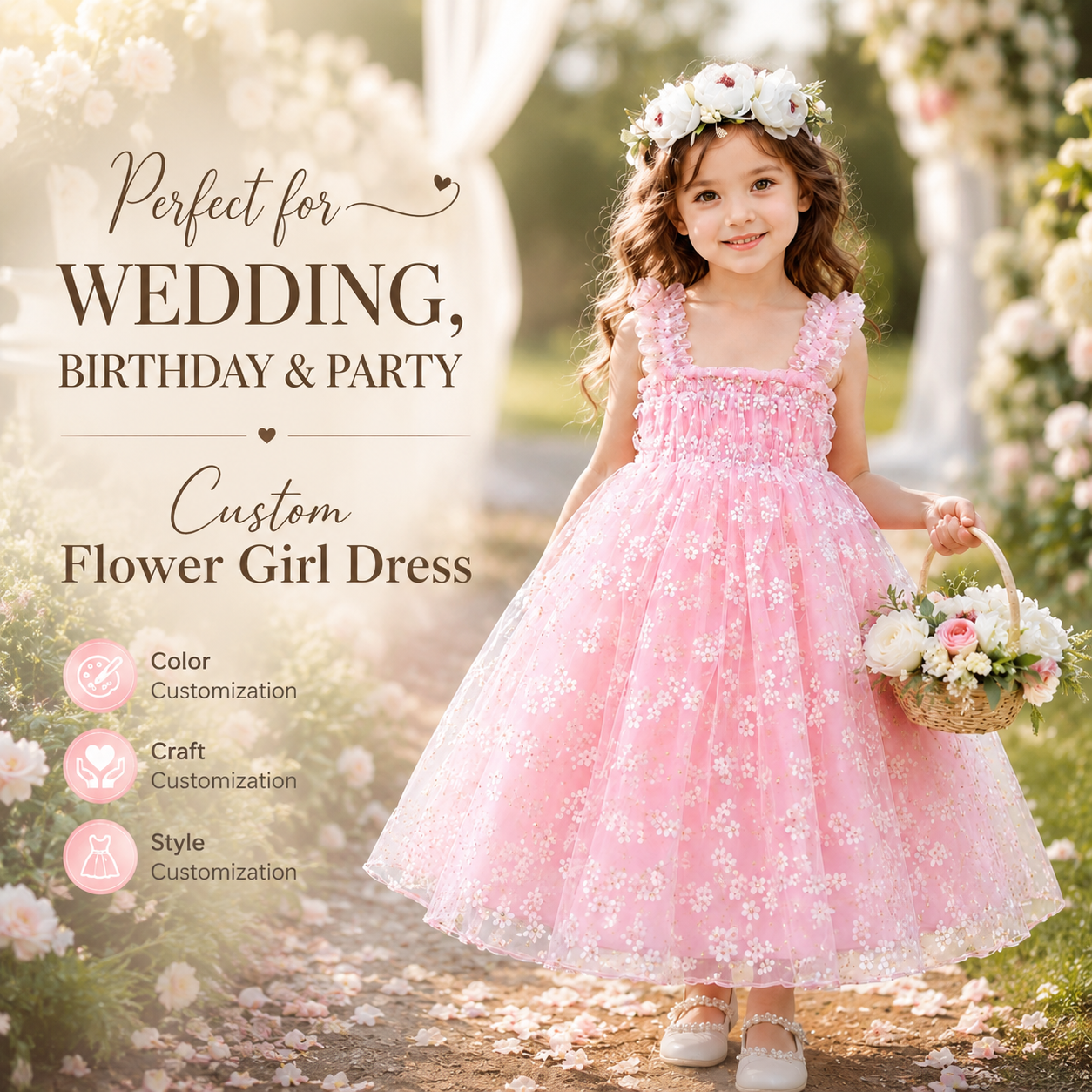
Image note: The visuals below are illustrative design references, not photographs of finished KOLESI TUTU samples. They do not verify fabric composition, available colors, measurements or construction.
Planning a Custom Flower Girl Dress Capsule: A Buyer’s Design Brief Checklist
Flower girl dresses bring several decisions together in one garment: the event setting, the child’s comfort, the visual identity of the wedding or occasion, and the needs of the retailer’s collection. For a boutique or kidswear brand, a clear design brief makes those decisions easier to review with a supplier. It also helps keep a new style consistent with the rest of a seasonal assortment.
The pink floral tulle images accompanying this article are illustrative design references. They are not photographs of a finished KOLESI TUTU sample, and they do not confirm fabric composition, available colors, measurements or construction. Treat them as a visual starting point. The final garment details should be confirmed through an approved specification and sample review.
1. Start with the silhouette
Describe the overall shape before choosing small decorations. Note the intended skirt length, fullness, waist position and bodice shape. Then list the neckline and sleeve direction. A ruffle strap, puff sleeve or simple sleeveless bodice can create a different look even when the base color and skirt remain similar. If you are planning a capsule, decide which silhouette details should stay consistent and which can vary between styles.
Back details deserve their own reference. A bow, button treatment or clean closure can affect both the appearance and the construction plan. Add a clear back-view sketch or reference image to the brief instead of relying only on a front photo.
2. Describe decoration precisely
“Floral” can refer to embroidery, lace, appliqué, printed motifs or small attached embellishments. Identify the decoration method you want reviewed, its approximate scale, placement and coverage. Mark whether the design should concentrate at the bodice, continue onto the skirt, or appear only as a small accent. For a tulle skirt, also clarify how the layers and any lining should look and feel. These are questions for specification review, not assumptions based on a concept image.
3. Set color references and options
Choose a primary color direction and provide a physical swatch, approved color reference or clearly labeled image when possible. If the range may include more than one shade, list the colors you want evaluated and ask the supplier to confirm what can be developed. Do not assume a digital screen image represents the final fabric shade. Record the approved color reference with the rest of the sample notes so later reviews use the same standard.
4. Prepare sizing and fit information
State the target age and size range, the market size chart you intend to follow, and any preferred finished-garment measurements. Identify how the dress should fit at the chest, waist and length. If you do not yet have a size chart, make that an open question for the development discussion rather than inserting guessed measurements. Review the sample against the approved measurement sheet before confirming a size run.
5. Plan branding and assortment details
For private-label development, gather the brand name, label artwork, placement preferences and packaging requirements before requesting a quote. If multiple styles will sit in one collection, show how the pieces relate: shared colors, coordinated trims, common size logic or consistent packaging. Separate must-have requirements from optional details so the supplier can identify which decisions affect the design and sample review.
A useful quote request includes the reference images, target market, size range, material preferences, decoration notes, color direction, branding needs and planned quantity by style. Ask the supplier to confirm the specification, sample process, pricing basis and schedule for the specific project. This keeps the discussion tied to the garment you are actually planning.
A flower girl dress capsule starts with clear choices, not a long list of vague adjectives. Define the silhouette, mark decoration placement, document color and sizing expectations, and review the approved sample before treating a concept as a finished product. KOLESI TUTU welcomes B2B inquiries from boutiques and kidswear brands exploring custom children’s occasionwear. Share your design brief to discuss next steps, or contact us on WhatsApp at +86 136 5006 1099.