Planning a Private-Label Girls’ Princess Dress: A Buyer’s Checklist
A memorable girls’ princess gown is built from several decisions that work together: silhouette, surface detail, color, fit, and the way the product appears in a boutique collection. For a buyer planning a private-label range, a reference image is useful when it starts a clear design conversation. Treat it as a visual direction; confirm fabric, measurements, construction, and final options for the actual project.
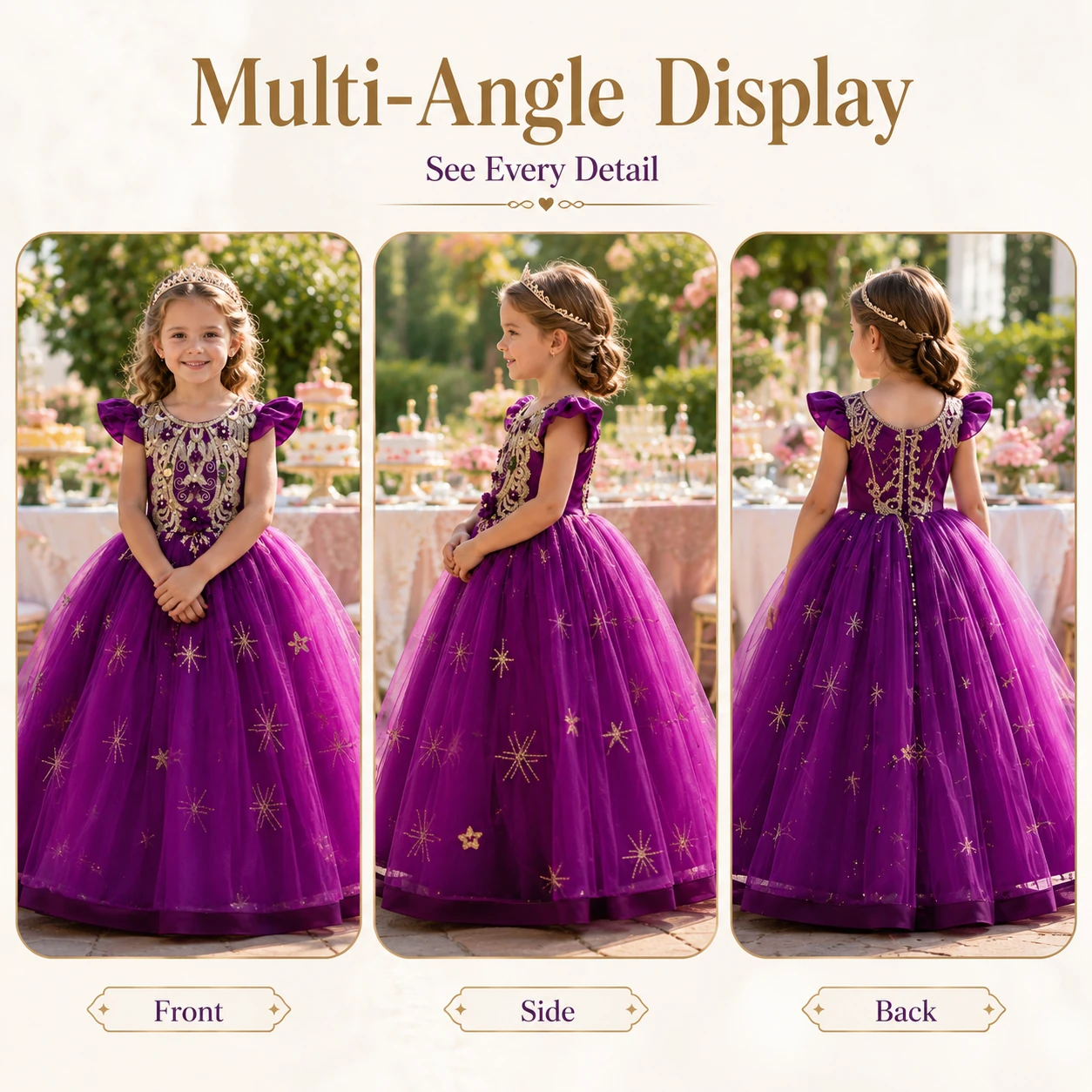
The purple gown shown in this series pairs a fitted-looking bodice with decorative embroidery, flutter-style sleeves, and a full layered tulle-style skirt. These visible elements create a starting point for discussing a special-occasion dress. A buyer can decide which features define the style and which details should change to suit a store, customer, or seasonal collection.
Begin with the silhouette
Before discussing trims, describe how the dress should look from the front, side, and back. Consider the bodice shape, sleeve coverage, waist placement, skirt length, and amount of volume. These choices affect how a gown photographs, how it sits beside other styles in a collection, and what the buyer expects from a sample. The multi-angle reference in this series can help a team identify the proportions it wants to preserve. Add a sketch or marked-up image if a neckline, sleeve, or back detail needs to change.
Set a clear embellishment direction
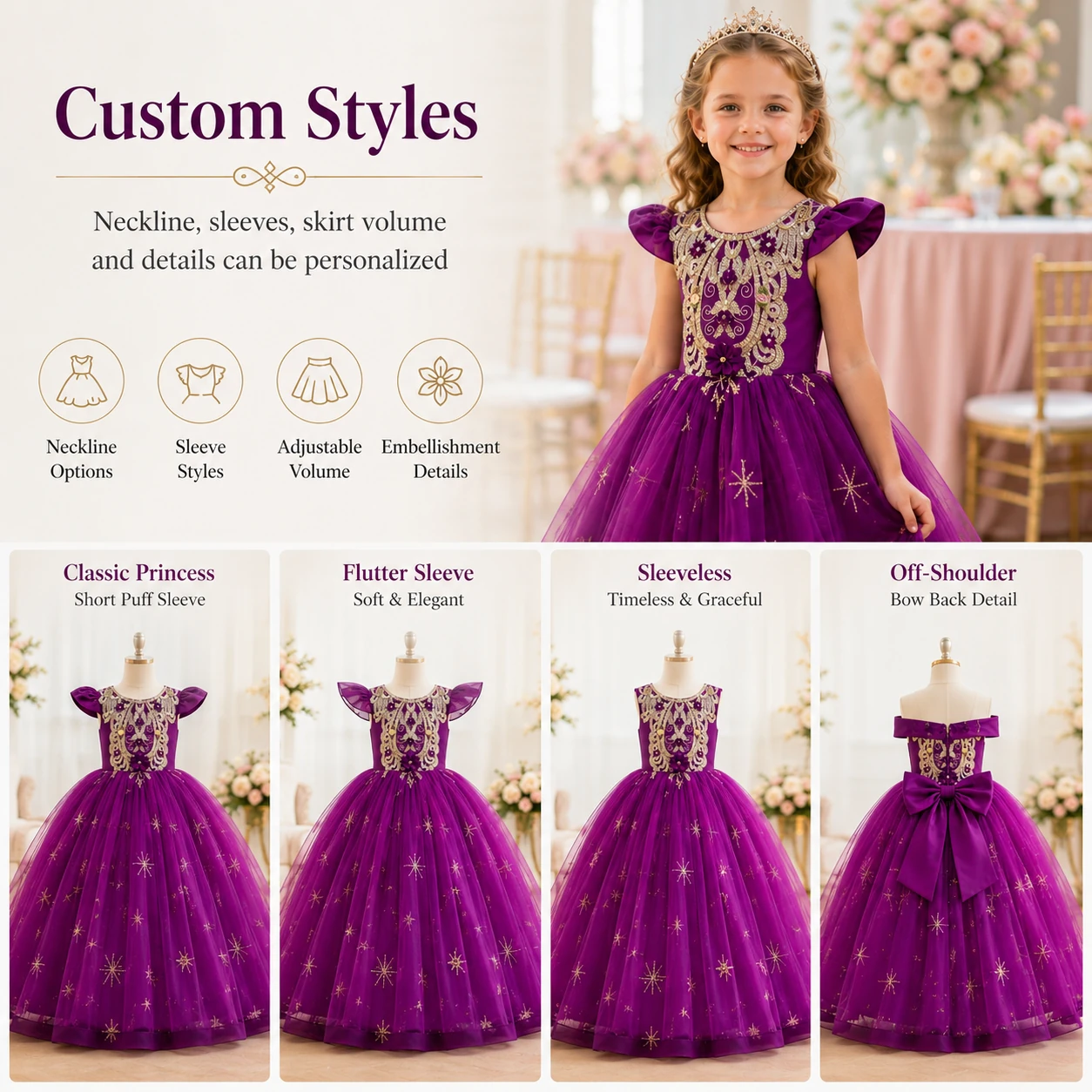
Embroidery can be a key visual feature on a princess gown, but buyers should explain its placement and overall intensity instead of relying on a broad term such as “more decoration.” Point to the bodice area, outline whether the design should feel dense or restrained, and note any motifs, colors, or trims that belong to the brand. If a reference contains details that are not confirmed for production, list them as questions for review. This keeps the conversation focused on the appearance you want without assuming a particular technique or material.
Plan color as part of the collection
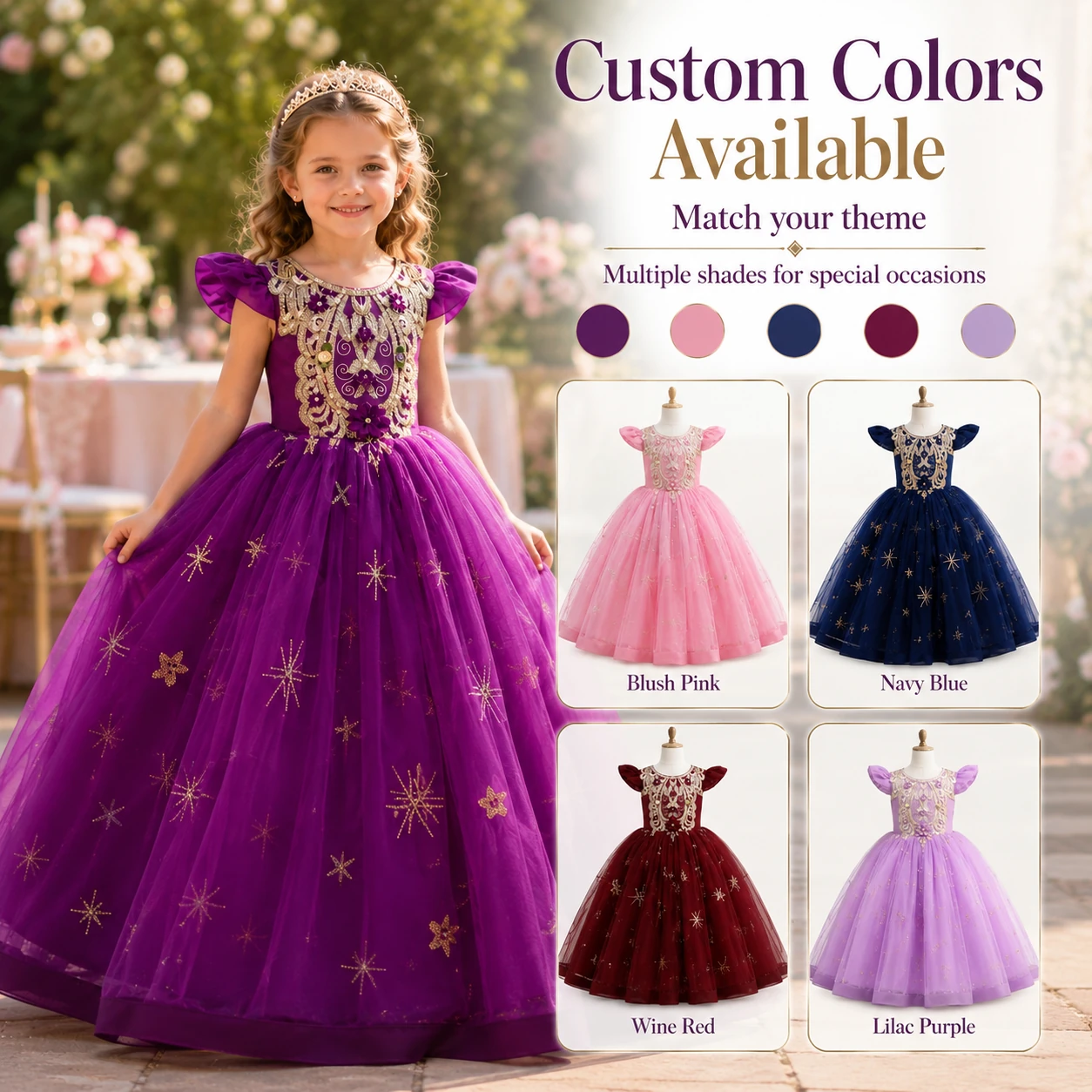
The images include purple as the main visual direction and show several related color references. A buyer can use these as inspiration for a palette discussion, then confirm which shades and materials can be considered for the project. If you are building a collection, decide whether the gown should anchor the palette or coordinate with other dresses. Share color references, swatches, or a Pantone target when available, and ask the team to confirm how the shade will be reviewed during development.
Confirm fit and product details
A product image cannot establish a reliable size range or finished measurement chart. For a useful quote, share the intended age or size range, your preferred measurement basis, and any fit notes from your market. Discuss lining, closure, skirt layers, trim security, and care-label requirements with the product team. The final specification should reflect confirmed materials and construction rather than assumptions inferred from a photo. Review the product collection for related occasionwear references before preparing a brief.
Make private-label requirements explicit
Branding details are easier to plan when they are part of the first conversation. Note whether you need a woven label, printed label, hang tag, size sticker, poly bag, or other packaging element. If your brand has artwork files or packaging standards, include them with the design reference. The OEM/ODM development page describes customization topics buyers can discuss, including fabrics, colors, embellishments, sizing, labels, and packaging.
Prepare a brief that supports review
A practical inquiry can include the style reference, target quantity, size range, destination market, color direction, branding needs, packaging requirements, and questions about materials or construction. Identify which features are essential and which are open to discussion. This makes it easier to review the style as a complete product instead of exchanging disconnected notes about color or decoration.
Before bulk production, review the sample against the approved brief. Check silhouette, measurements, fabric hand, decoration placement, seams, closures, labels, and packaging. Record requested changes clearly and confirm the final specification before moving to the next stage. Use the contact page to share a project brief and request a quote. WhatsApp is also available at +86 136 5006 1099.
For boutiques and private-label buyers, a strong princess-dress brief balances visual appeal with decisions that can be checked. Use the purple gown images to start the conversation, document the details that matter to your assortment, and confirm every project-specific point before approval.