How to Specify Labels and Packing for Private Label Girls’ Dresses
For private label girls’ dresses, a useful sourcing brief identifies the dress, the size system, the brand artwork and the packing method together. Buyers should define what each label says, where it belongs and how the finished dress should arrive. This gives the supplier a clearer basis for discussing the project and the buyer a practical checklist for reviewing a sample.
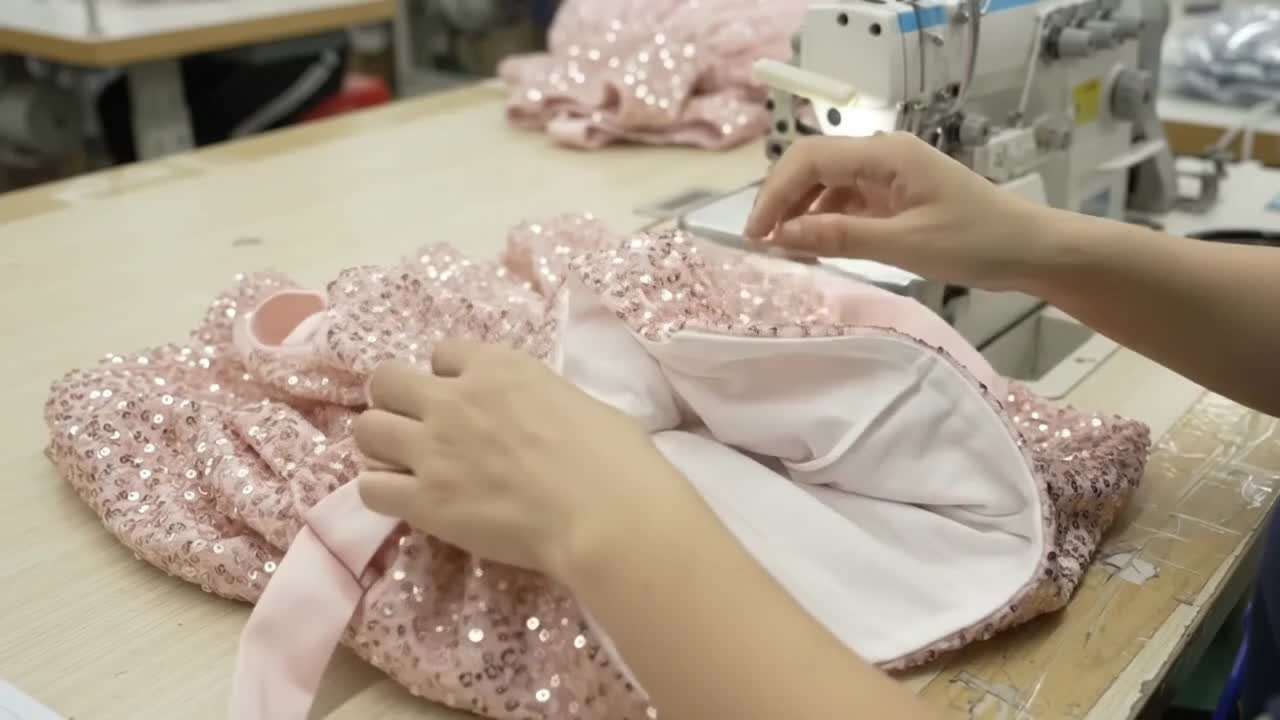
A pink dress with a sequin bodice and a tulle skirt can communicate a collection’s visual direction. A reference image alone, however, cannot explain the lining, label construction or packing requirements. The supplied style video illustrates appearance and discussion points; it does not establish finished specifications or document a completed packing order.
Start with one identifiable dress style
Give each proposed style a working reference code. Attach matching front views and detail references, then identify the color, intended size range and quantity for discussion. Keep the same code on the artwork files and packing brief so everyone can connect the documents to the correct dress.
For this pink sequin-and-tulle direction, separate visible design choices from details that still need confirmation. Describe the intended bodice appearance and skirt silhouette, then ask to review the lining, seams, fastening and trim through an agreed sample. Do not treat a photograph as confirmation of fabric composition or garment construction. Browse the girls’ dress product range to identify the closest starting point for your enquiry.
Define the job of each label
A brand label, a size label and a care label serve different purposes. Your brief should distinguish them rather than simply requesting “custom tags.” For the brand label, provide the approved spelling, logo artwork, colors and preferred dimensions. Discuss placement and attachment with the supplier, including how the label will sit against the garment.
For size labels, state the exact size codes your range will use. A buyer selling by age should still provide the measurements and grading requirements for discussion; the age designation alone does not define fit. Keep the size codes consistent across the garment label, hangtag and packing list.
Prepare care and composition information from the approved materials and intended sales market. Do not copy wording from a different dress or infer it from a video. Have the required information checked for the destination before approving the final artwork. Leave unresolved fields clearly marked for confirmation during development.
Connect packing instructions to the dress design
Describe how you want the dress presented when it is unpacked. For a tulle skirt, discuss folding, space around decorative elements and whether individual garment protection is needed. Ask the supplier to propose a method for sample review instead of assuming one packing format suits every silhouette.
If you need hangtags, inserts or branded packaging, list them as separate items in the enquiry. Specify the artwork version and placement, and clarify which materials the buyer will supply and which the supplier is being asked to source. Include any barcode or SKU requirements in the same document. KOLESI TUTU’s custom dress development information provides a starting point for discussing design, labels and packaging together.
Make mixed-size orders easy to identify
Write the style, color and size breakdown as a table. Include a proposed quantity for each combination and explain any assortment requirements. If several sizes will share a carton, state how you want the contents identified and listed. Keep decorative packaging separate from practical shipping identification so neither is overlooked.
Use a simple cross-check: a person reading the garment size label, the individual packing label and the carton contents list should be able to identify the same item. Where buyer systems require a specific barcode format or SKU convention, supply that requirement for review rather than asking the supplier to invent it.
Approve a complete reference before proceeding
Review the dress and its proposed presentation together. Check the appearance, measurements, lining, label wording, attachment positions and packing arrangement against the written brief. Record changes with a date or version number, then replace outdated artwork rather than leaving conflicting files in circulation.
This checklist organizes the enquiry; it does not confirm a price, production schedule or finished construction. Those details need agreement for the specific project. To discuss a private-label girls’ dress range with KOLESI TUTU, send your design reference, size breakdown, quantity and delivery destination through the B2B enquiry page or WhatsApp +86 136 5006 1099. Add the label and packing brief so the conversation begins with the requirements that matter to your brand.