How to Write a Packing Brief for Private-Label Girls’ Party Dresses
A girls’ party dress packing brief should identify the garment, describe the proposed folding and trim arrangement, list the size and item labels, define the carton assortment, and record what the buyer must approve. Use an actual packed sample to review the proposal. A styled product photo cannot establish how the garment will look after packing or transport.
For this brief, consider one dress direction: a black bodice, champagne star-pattern skirt and black waist bow. The matching front, side and back references help identify the style. They do not show a packing trial. Browse the girls’ dress collection to identify your intended style before writing instructions for it.
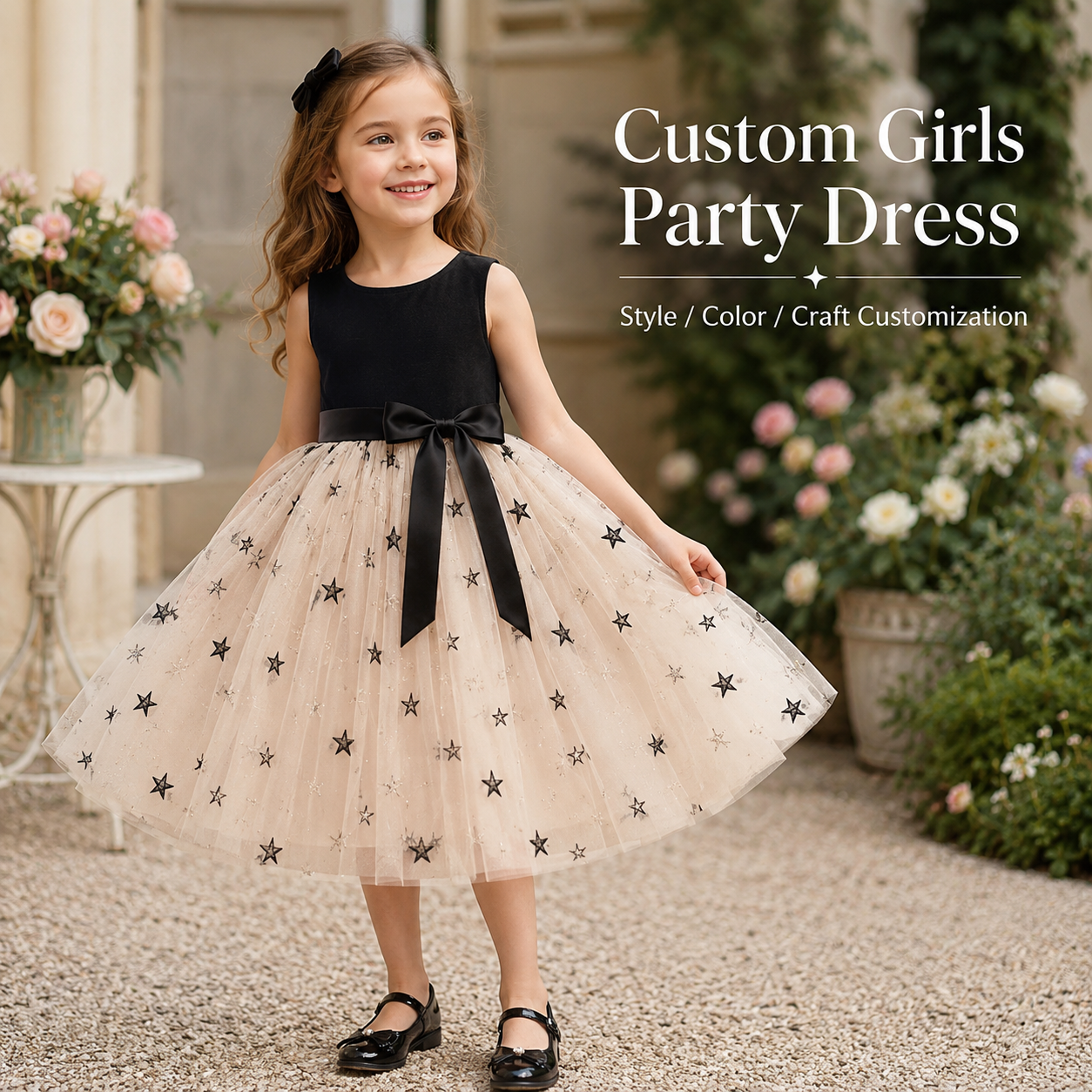
Identify the dress and the receiving task
Start with the style code, color reference, sample size and garment specification version. Add the packing brief date and buyer contact. State whether the receiving team will place garments directly into boutique stock, separate them into size groups, or repack them for individual orders. This gives the supplier a practical task to discuss rather than an instruction such as “premium packaging.”
Keep the photographed appearance separate from your requirements. A visible bow can be marked on the reference, but its attachment method, material and removability need confirmation from the approved garment specification. Do not ask the packing team to detach a trim unless that construction and packing method have been agreed.
Describe the proposed fold and bow position
Ask for a packing proposal that shows the garment before folding, the fold sequence and the final packed arrangement. Mark where the bodice, skirt and bow should sit. If tissue, a garment bag or another separator is proposed, identify its location and purpose in the brief. Leave the material choice open until the buyer and supplier have reviewed it.
For a fuller skirt, assess the proposal with the relevant sample size instead of choosing a bag from a flat product image. Record the proposed bag dimensions and closure, then check whether the sample fits as intended. These are review steps, not a promise that a particular packing method prevents creasing or preserves volume during shipment.
Separate garment labels from packing identifiers
List the information needed on the garment, individual pack and outer carton as separate fields. A buyer’s warehouse item code serves a different purpose from a garment size label. State the exact text or artwork version, its intended location and who will approve it. If barcodes are required, provide the buyer-approved data and review a readable sample before approval.
KOLESI TUTU’s customization service includes discussions about packaging and labels. Bring the intended destination and sales channel into that discussion. Confirm any market-specific labeling or packaging requirements with the responsible compliance adviser; this planning checklist does not establish legal compliance or replace the required review.
Write a carton assortment the receiver can follow
Specify whether each carton should contain one size or an agreed size assortment. Use the same style, color and size names as the purchase order. If the order has several destinations, identify the allocation for each destination before the final carton plan is approved. Ask the supplier to confirm the proposed carton dimensions and packed weights from the actual arrangement.
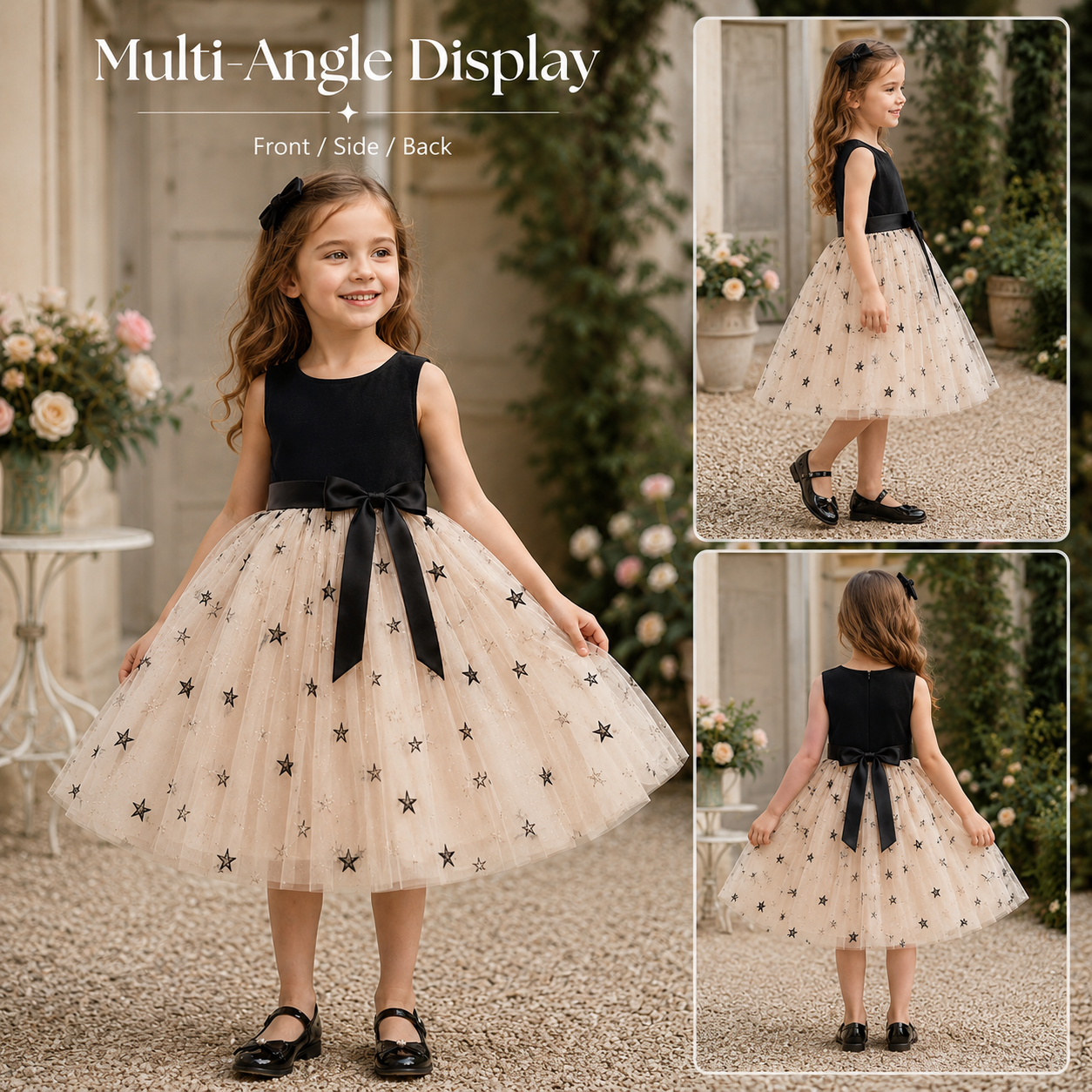
An illustrative instruction might read: “Style STAR-A, black/champagne, packing brief revision B. Keep the waist bow attached. Submit photographs of the proposed fold and a packed sample for buyer review. Separate the smallest size from the remaining size assortment as shown on the approved order sheet.” This is a hypothetical example, not a description of a completed KOLESI order or an approved packing method.
Approve the packed sample and record open questions
Review the packed sample against the written brief. Check identity, fold position, visible trim arrangement, pack closure, label wording and the proposed carton marking. Unpack the dress and assess the areas that matter to your presentation standard. Record the sample size and review conditions so the feedback refers to a specific example. Ask for another review when a change affects the arrangement.
Finish with an approval record: packing brief version, reviewer, date, accepted details and unresolved questions. Keep garment approval and packing approval as distinct entries. For a project discussion, send KOLESI TUTU your packing brief with the style reference, size plan, destination and estimated order quantities. WhatsApp: +86 136 5006 1099. Request confirmation of the proposed arrangement before treating any option as agreed.